

Buying conference chairs for large-scale projects requires more than selecting a design and requesting a price. For conference halls, auditoriums, and public venues, seating is a long-term investment that must meet technical, functional, and operational expectations.
Many buyers underestimate the complexity of this process. However, the right purchasing strategy can significantly reduce long-term costs while improving user experience and project efficiency.
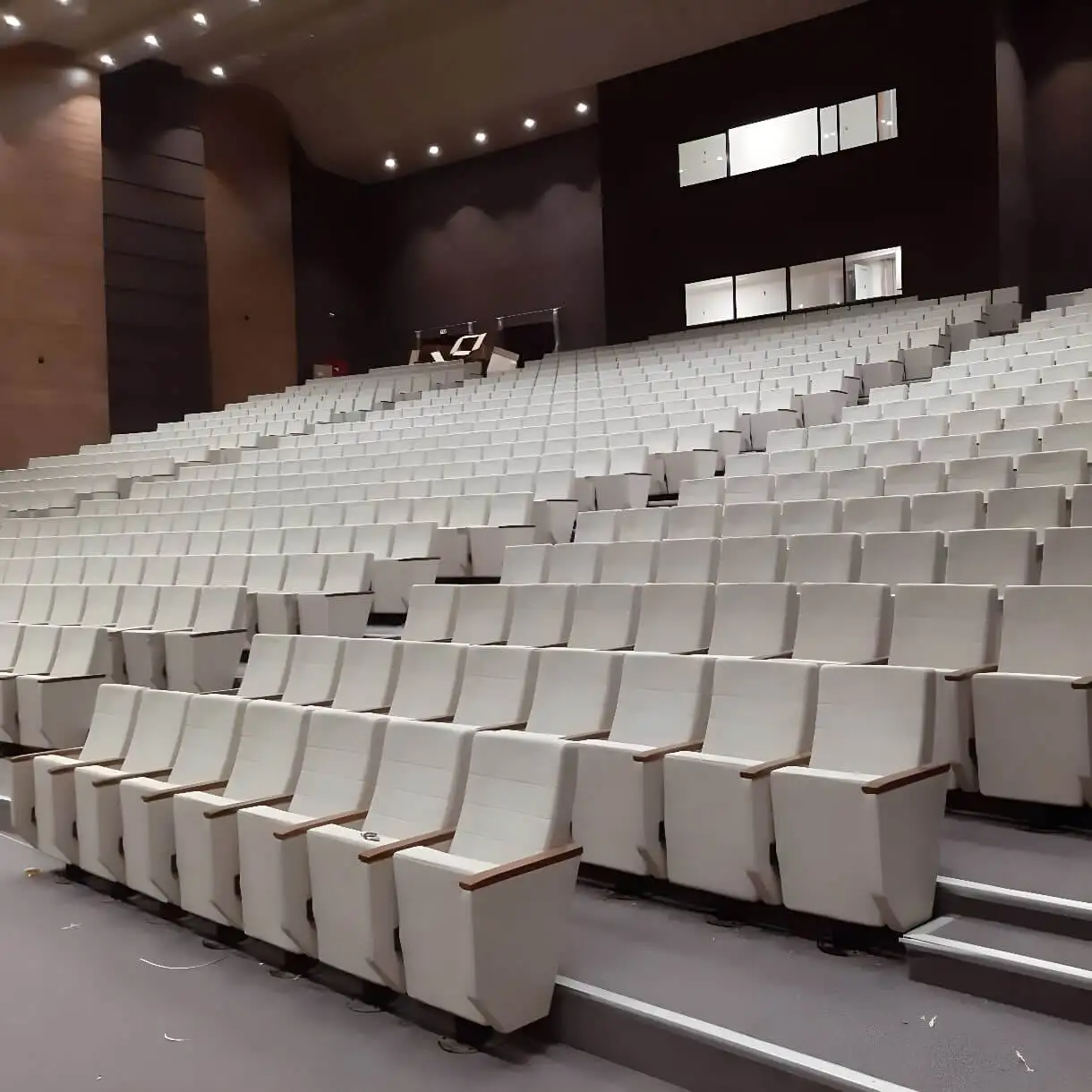
Start with Project Definition
Before contacting any supplier, the project must be clearly defined. This step determines the accuracy of pricing and the suitability of the seating system.
Key project details include:
- Type of venue (conference hall, auditorium, university)
- Total number of seats
- Floor type (flat or tiered)
- Row spacing and step dimensions
- Required features (writing tablets, numbering, accessories)
Without these details, quotations will remain generic and difficult to compare.
Choose the Right Conference Chair Type
Not all conference chairs are suitable for every project.
Fixed Conference Seating
The most reliable solution for large venues. Fixed systems provide stability, uniform layout, and long-term durability.
Foldable Seat Systems
Foldable seats improve space efficiency and allow easier movement between rows.
Premium Conference Chairs
Used in high-end venues where comfort and design are prioritized over maximum capacity.
Evaluate Structural Quality
The internal structure of a conference chair determines its performance over time.
Important factors:
- Steel frame thickness and strength
- Quality of welding and connections
- Protective coating against corrosion
A strong structure ensures long-term reliability, especially in high-use environments.
Understand Foam and Comfort
Comfort is directly linked to the type of foam used.
- Molded foam maintains shape and density over time
- Cut foam loses form faster and reduces comfort
For long sessions, proper ergonomic support becomes essential.
Select Appropriate Upholstery
Material selection affects both durability and maintenance.
Options include:
- Fabric for standard use
- Faux leather for easy cleaning
- Real leather for premium applications
In public projects, additional treatments such as flame retardancy are often required.
Check Mechanism Performance
The folding mechanism is one of the most critical components.
High-quality mechanisms:
- Operate smoothly and quietly
- Resist wear over time
- Require minimal maintenance
Poor mechanisms can create noise and operational issues.
Request a Detailed Quotation
A professional quotation should include:
- Technical specifications
- Material descriptions
- Optional features
- Production timeline
- Packaging and shipping details
Clear documentation prevents misunderstandings later.
Compare Suppliers Beyond Price
Selecting a supplier based only on price is a common mistake.
Key criteria to evaluate:
- Manufacturing capability
- Experience with large projects
- Technical support and drawings
- Certification compliance
- Communication and responsiveness
A reliable supplier ensures a smoother project process.
Plan Logistics and Delivery
Conference chairs are typically shipped in large quantities.
Important considerations:
- Shipping method (usually sea freight)
- Delivery timelines
- Packaging type (assembled or disassembled)
- Coordination with installation schedule
Proper planning reduces delays and additional costs.
Bulk Purchasing Advantages
Large projects benefit from bulk purchasing:
- Lower unit costs
- Consistent production quality
- Better negotiation flexibility
However, production capacity and lead time must be confirmed.
Final Buying Checklist
Before placing an order, confirm:
- Technical specifications are clearly defined
- Materials meet project requirements
- Certifications are available
- Layout and measurements are verified
- Delivery timeline is agreed
- Supplier communication is reliable
This checklist helps avoid common project issues.
Conclusion
Buying conference chairs for large projects requires a structured and informed approach. By focusing on technical quality, supplier reliability, and long-term performance, buyers can ensure a successful and cost-effective investment.
A well-planned purchase not only improves project outcomes but also guarantees durability and user satisfaction over time.